Showing posts with label health. Show all posts

Thursday, January 7, 2016

Grand Challenges African forum set for Nairobi

In 2003, the Bill and Melinda Gates Foundation launched Grand Challenges. It focused on 14 major scientific challenges that, if solved, could lead to key advances in preventing, treating, and curing diseases in the developing world.


The Grand Challenge framework encompasses global health, water, energy, environment, food, education, security, and poverty. It focuses on research efforts and engaging the world’s best researchers. Projects are selected based on public, transparent calls for proposals seeking the best ideas. Funders, investigators, and other stakeholders actively collaborate to accelerate progress and integrate advances to ensure that they serve those most in need.
read more: www.the-star.co.ke/news

Tuesday, June 16, 2015

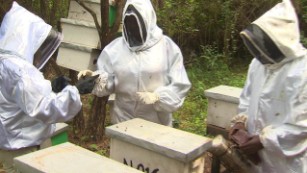
African 'killer bees' are all the buzz for health solutions

A scientist works at the Queen Breeding Lab at the African Reference Laboratory for Bee Health in Nairobi, Kenya.Africanized bees, known as "killer bees," once gained notoriety in the United States for swarming and killing.

But while Africa's bees tend to be more aggressive than their European or American counterparts, their aggression also makes them more productive and resilient.

The International Centre of Insect Physiology and Ecology in Nairobi is working to utilize the African bee and its aggression to the continent's advantage. read/see more: edition.cnn.com

Friday, September 20, 2013

From savannah to slums, Kenyan yoga strikes a pose

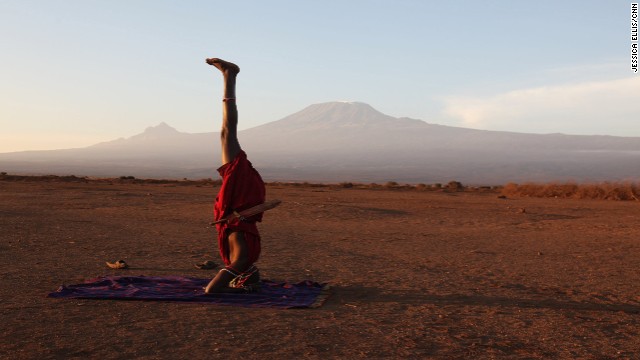
Yoga is spreading across Kenya thanks to the Africa Yoga Project. Even the Maasai tribe is starting to embrace this practice from another culture.
There he stands, Mount Kilimanjaro in the background, striking a pose on a purple mat, bathed in the light of dawn. Breathing. Stretching. Opening up his mind -- a group of young children following and copying his every move.

Watching a Maasai warrior practice yoga is a rare sight, but Jacob Parit is not only a warrior in one of Africa's best-known tribes, he's also an instructor with the Africa Yoga Project. read more: edition.cnn.com

Monday, July 22, 2013

Doctor emerges top in global contest

Pyeko Menach
Linkedin Profile
A Kenyan doctor is the winner of Young Scientist of the Year Award the IFOS 2013 Congress Scientific Secretariat held in Seoul, Korea.

Dr Owen Pyeko Menach was feted at the 20th World Congress of the International Federation of Oto-Rhino-Laryngological Societies (IFOS), held from June 1 to 5, 2013 in Seoul, Korea.

Dr Menach, an ENT Surgeon at Kenyatta National Hospital, beat 100 entrants to clinch the coveted award at the global congregation of Ear, Nose and Throat specialist doctors held once every four years Dr Menach emerged first beating 100 global finalists. Read more: www.nation.co.ke/News

Wednesday, November 21, 2012

Life expectancy jumps to 64 years

The life expectancy of a Kenyan has increased to 64 years up from 55 two years ago, a report released on Sunday shows.

The data compiled by the University of Nairobi in partnership with 12 other universities worldwide notes that the life of Kenyans has improved substantially and they can expect to live longer.

The report, State Of The Tropics, further says that Zimbabwe is the only nation in the world that recorded a decline in life expectancy at 47 years. read more: www.nation.co.ke/News

Life Expectancy in the Tropics
THE REPORT: The State of the Tropics report will consider the question: Is life in the tropics getting better?
Key institutions from across the world have joined forces to assess and report on the critical questions facing one of the world’s most important and fastest regions: the Tropics.

Over the past half-century the Tropics has emerged as an increasingly critical region. More than 40% of the world’s population now lives in the tropics and this is likely to be close to 50% by 2050. The region generates around 20% of global economic output and is home to some 80% of the world’s biodiversity. more: stateofthetropics.org

Tuesday, October 30, 2012

Nasimiyu beats cancer

Do you remember Rose Nasimiyu? The girl, who at nine years, last year, gained fame countrywide due to her brave battle with cancer?

Well, the princess who won everybody’s heart with her courage and positive nature was on Monday declared cancer free. It has been a battle that has seen the young girl fight for her life, balance medication and academics, and thanks to generous donations from well-wishers, she has undergone treatment and is now cured. Read more: www.standardmedia.co.ke

Friday, June 22, 2012

Africa is experiencing some of the biggest falls in child mortality ever seen, anywhere.


It is, says Gabriel Demombynes, of the World Bank’s Nairobi office, “a tremendous success story that has only barely been recognised”. Michael Clemens of the Centre for Global Development calls it simply “the biggest, best story in development”. It is the huge decline in child mortality now gathering pace across Africa.

Three countries—Senegal, Rwanda and Kenya—have seen falls of more than 8% a year, almost twice the MDG rate and enough to halve child mortality in about a decade. These three now have the same level of child mortality as India, one of the most successful economies in the world during the past decade.

Kenya is a test case. It has cut the rate of infant mortality (deaths of children under one year old) by more than any other country. It has had healthy economic growth (4.8% a year in 2005-10) and a functioning democracy, albeit after horrendous post-election violence in 2008. But Mr Demombynes noticed something else: it increased the use of treated bednets from 8% of all households in 2003 to 60% in 2008. Using figures on the geographical variation of malaria, he calculated that half the overall drop in Kenya’s infant mortality can be explained by the huge rise in the use of ITNs in areas where malaria is endemic.

Bednets are often taken as classic examples of the benefits of aid, since in the past they were pioneered by foreign charities. Consistent with the view that aid is vital, Jeffrey Sachs, an American economist, recently claimed that a big drop in child mortality in his Millennium Villages project (a group of African villages that his Earth Institute of Columbia University, New York, is helping) is the result of large increases in aid to villagers. In fact, argues Mr Demombynes, the mortality decline in these villages was no better than in the countries as a whole.

The broad moral of the story is different: aid does not seem to have been the decisive factor in cutting child mortality. No single thing was. But better policies, better government, new technology and other benefits are starting to bear fruit. “This will be startling news for anyone who still thinks Africa is mired in unending poverty and death,” says Mr Clemens. But “that Africa is slipping quickly away.” Source: The Economist
image source: feedback.abroaderview.org
 

Monday, February 13, 2012

Gearing up for Kenya challenge!


Janet Eccles ready to take on the Women vs Cancer cycle challenge. Photo: 0019SB-5.

AFTER months of training and preparation, a plucky mum is getting ready to jet off for an epic cycling challenge.

Janet Eccles, from Kirkby la Thorpe, is flying out to Kenya on Saturday to take on a five-day, 400km cycle challenge from the slopes of Mount Kenya to the shores of Lake Victoria, all to raise money for Women vs Cancer.

She will be raising money for three women’s cancer charities; Breast Cancer Care, Jo’s Cervical Cancer Trust and Ovarian Cancer Action.

Janet, 49, has raised nearly £3,000, beating her target of £2,800.

She said: “I am immensely proud to be a part of such a wonderful event.”

Janet has been training hard for this challenge since spring last year and has been clocking up 50-mile bike rides and four to five hour cycling sessions in recent weeks.

However, she does admit to having some concerns as to how well her troublesome knee will hold out.

She said: “As reality dawns on me, I am once again growing fearful of the enormity of what lies ahead and hoping my arthritic knee holds up until I’m back.

“I am having surgery on the knee when I get back.”

During the challenge Janet will be cycling in temperatures of over 25 degrees, and one of the five days of cycling involves constant climbing.

While in Kenya, the participants will have the chance to visit a local school and a hospital for women affected by cancer. They will be taking pens and crayons to give to the children and clothes and toiletries for the women at the hospital.

Janet said that her inspiration to do the challenge came when she lost a close friend to breast cancer at the age of 42 in 2007.

She added that when she signed up for the challenge she was the same age as her mother was when she died - 48 - which made her feel emotional about how frail life can be. This was another major motivation for her to do something big before she got ‘too old’.

When she has completed her challenge, Janet’s family will fly out to Kenya to join her for a well earned break, before returning to the UK on March 4.

To sponsor Janet on her challenge, visit her JustGiving page at http://www.justgiving.com/janet-eccles

Source: Sleaford Standard

Wednesday, February 1, 2012

Doctor Frank Njenga fights mental health stigma in 'traumatized continent'

Every week CNN International's African Voices highlights Africa's most engaging personalities, exploring the lives and passions of people who rarely open themselves up to the camera.
As Kenya's leading psychiatrist, Frank Njenga has been championing the cause of better mental health care on the east African country and the continent for more than three decades.

He's been working tirelessly to bring quality mental health care in a country where mentally disabled people receive little help from the state and face massive stigma from society.

"It's a horrible indictment on what we've done but the truth and reality is that very little has been done systematically and deliberately by government or by ourselves to bring up the level of mental health in this part of the world," says Njenga. Read more: CNN African Voices

Tuesday, January 10, 2012

Global good practices: Kenya's TB campaign proves a success


A series of public-health campaigns, including more aggressive screening, have been credited with a drop in tuberculosis cases in Kenya.

The screening and treatment programme, regarded as one of the best in the developing world, is credited with taking the rate of TB infections in the East African country from a high of 116,000 in 2006 to 106,000 last year.

However, this significant turnaround comes at an economic and political price. For TB screening and treatment programmes to be effective, supply chains for drugs and equipment and proper training for staff and administrative back-up must be in place.

Al Jazeera's Peter Greste reports from Nairobi.

Wednesday, November 23, 2011

Kenyan awarded $250,000 to fight pre-natal deaths in Sub-Sahara Africa

A Mother with her newborn at Kangaroo Mother Care in Malawi
Sam Agutu is among two innovators awarded $250,000 (approximately Sh25,000,000) to develop pre-natal care solutions. Two projects, one using cell phones to deliver to expectant mothers in Kenya electronic vouchers for pre-natal care and transportation, the other aimed at promoting maternal and child health in northern Nigeria, will receive $250,000 grants from the Saving Lives at Birth Partnership. read more at source: businessdailyafrica.com

Two Breakthrough Innovations to Address Maternal and Newborn Deaths in Sub-Saharan Africa
Sam Agutu’s Kenyan group, Changamka Microhealth based in Nairobi, is proposing e-vouchers delivered through cell phones to encourage women to seek care during their pregnancy and at birth. In remote areas health care costs and distance to clinics are barriers for women. The e-vouchers can be used to pay for pre-natal care and transportation. read more at source: savinglivesatbirth.net

Mobilizing Maternal Health In Rural Kenya With E-Vouchers And Information Technology
We aim to double rates of skilled assistance at birth and dramatically improve maternal and child health outcomes in rural areas of Kenya’s Western Province by using an integrated solution that empowers poor women to overcome financial and informational barriers to life-saving health services.   We will administer a system of subsidized pre-paid e-vouchers and transportation subsidies delivered via mobile phone, as well as informational interventions, including SMS messaging, participatory networks, and radio. read more at source: savinglivesatbirth.net


The Saving Lives at Birth innovations Challenge
Seventy-seven finalists out of over 600 applications were selected to compete in the final stage of the Saving Lives at Birth program. Applications from across the globe were received – including from non-profits, faith based organizations, universities, and private enterprises – spanning a wide range of solutions. The innovators traveled to Washington July 26-28 to participate in the Saving Lives at Birth DevelopmentXChange July 27-28, 2011. read more on the awards: savinglivesatbirth.net